
569 native trees and shrubs, a community of volunteers, and a vision for bringing environmental restoration, public art, education, and remembrance together along the Blue Green Connector.
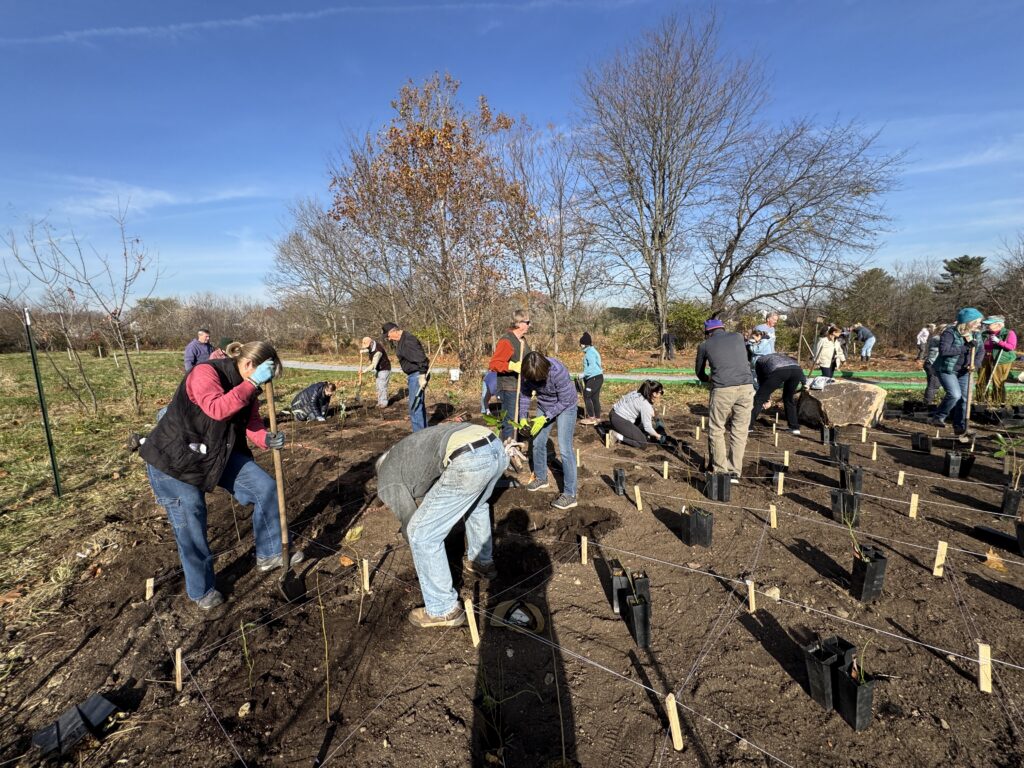
At Noel Dorwart Park, something small is taking root with the potential to make a lasting impact.
40 Volunteers recently gathered to help establish the Blue Green Connector’s Tiny Forest, planting a diverse collection of native trees and shrubs that will gradually transform the landscape into a thriving woodland habitat.
The planting marks an exciting milestone in the development of a special destination along the Connector, one that will bring together environmental stewardship, public art, outdoor recreation, and the legacy of a local environmental leader. It will also become the future home of a public art installation honoring the beloved white piebald deer whose presence captured the hearts of many throughout Lancaster County.
Small Forest, Big Impact
A Tiny Forest is a densely planted, biodiverse woodland designed to replicate many of the ecological functions of a natural forest within a relatively small footprint.
The Tiny Forest at Noel Dorwart Park draws upon the Miyawaki Method of forest restoration, developed by Japanese botanist and ecologist Dr. Akira Miyawaki. This approach emphasizes densely planting a diverse mix of native trees and shrubs to encourage the development of a layered, resilient forest ecosystem.
Unlike traditional landscaping, which often spaces trees and shrubs far apart, Tiny Forests bring a variety of native species together in close proximity. As the plants establish themselves, they create layers of vegetation, develop interconnected root systems, and provide increasingly diverse habitat.
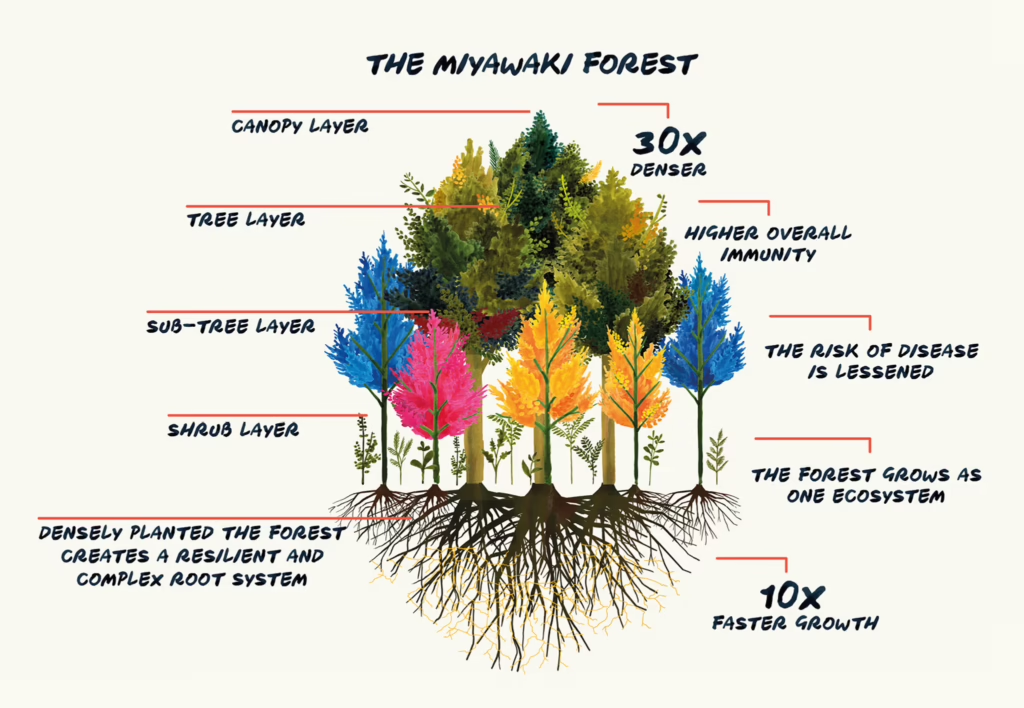
Over time, this approach can help:
- Increase biodiversity and support native wildlife and pollinators.
- Improve soil health and water infiltration.
- Reduce stormwater runoff and erosion.
- Capture and store carbon.
- Provide shade and help moderate surrounding temperatures.
- Create opportunities for environmental education and community stewardship.
Designed by Susan Baldrige, the Tiny Forest builds upon the Blue Green Connector’s broader commitment to rewilding and ecological restoration, demonstrating how even relatively small spaces can contribute to healthier, more connected ecosystems.
While the individual seedlings may look small today, together they represent the beginnings of a complex living ecosystem that will continue to evolve for generations.
569 Native Trees and Shrubs: Building Biodiversity
The Tiny Forest planting plan at Noel Dorwart Park includes 569 native trees and shrubs representing 23 species or species groups, selected to establish a diverse, layered woodland on both sides of the trail.
The planting incorporates a combination of future canopy trees, smaller understory trees, and shrubs, each contributing to the structure and ecological function of the forest.
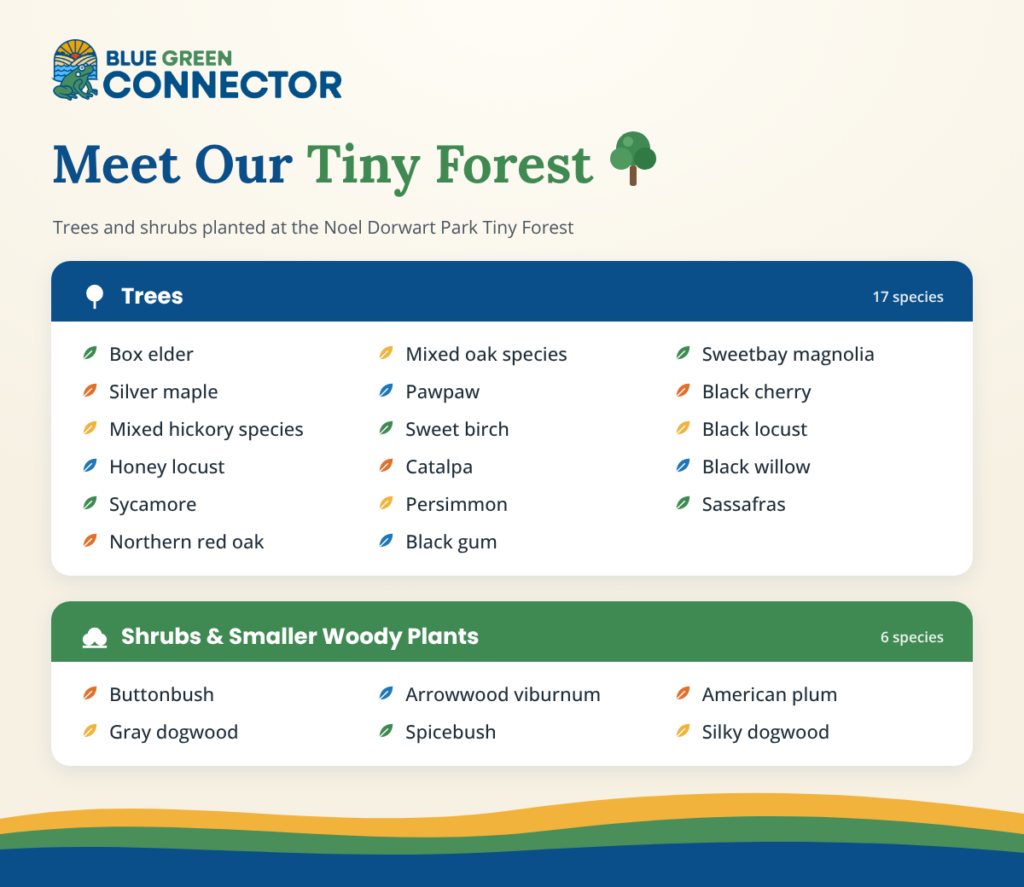
Each species plays a role in supporting the developing ecosystem. Oaks and hickories provide valuable food and habitat for wildlife, while flowering species such as buttonbush and sweetbay magnolia support pollinators. Fruit-bearing plants, including pawpaw, persimmon, black cherry, and American plum, contribute additional food sources for wildlife.
This diversity is intentional. As Penn State Extension explains in its overview of forest biodiversity, biologically diverse forests support complex ecological relationships and contribute to the overall health of woodland ecosystems.
As the Tiny Forest matures, its developing canopy, understory, and shrub layers will gradually reshape the experience of traveling through this section of the Connector.
Visitors returning over the coming years will have the unique opportunity to watch an entire forest grow around them.
Many Hands, One Growing Forest
Creating a forest is not simply about putting trees in the ground. It requires thoughtful planning, preparation, collaboration, and a long-term commitment to care.
The planting brought community members together to dig, plant, and install protective fencing, helping turn the vision for this space into reality.
The Blue Green Connector extends its gratitude to the Lancaster County Solid Waste Management Authority (LCSWMA), Alliance for the Chesapeake Bay, and Penn Stone for their contributions to this initiative, as well as to the volunteers who generously shared their time and energy.
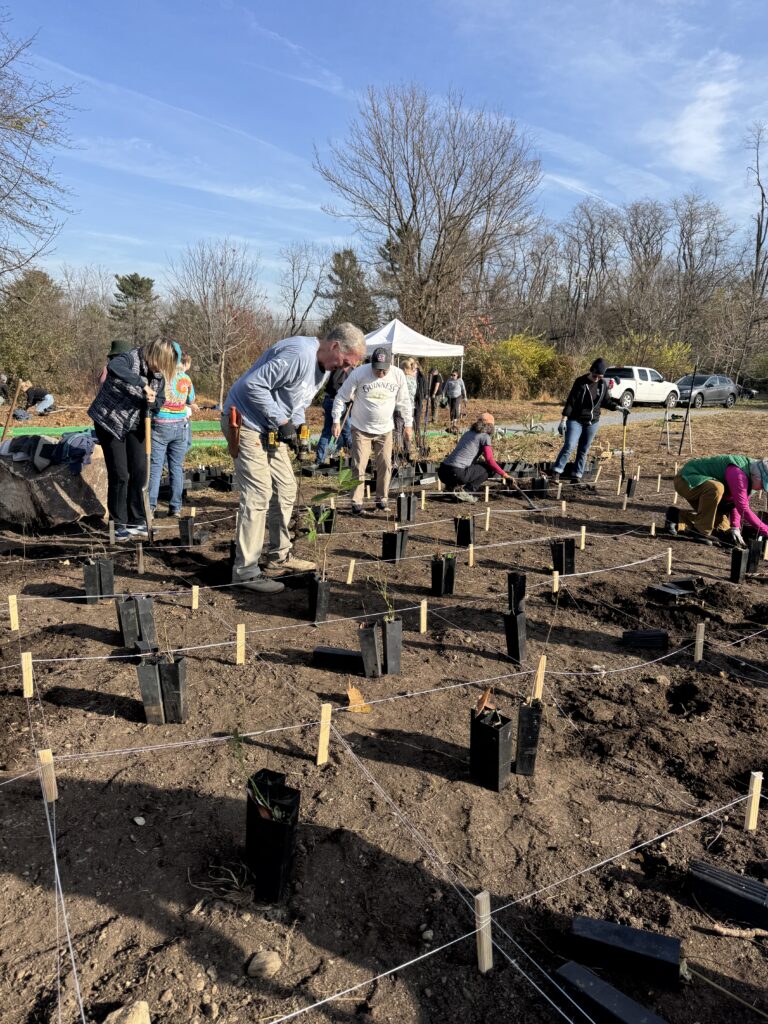
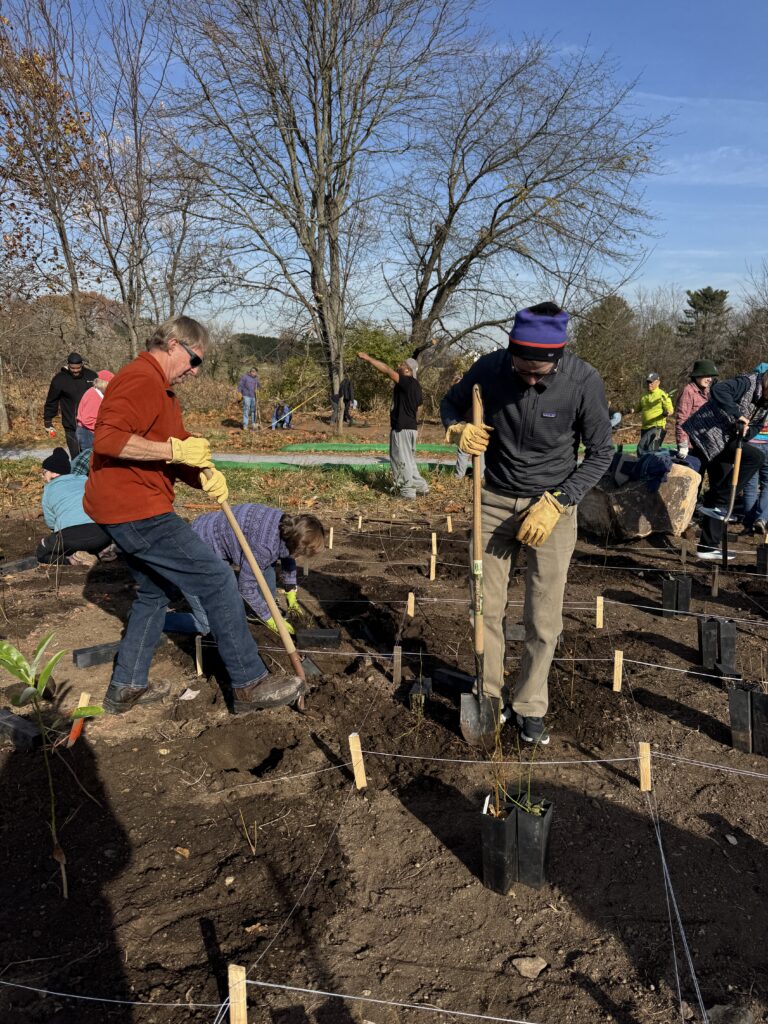
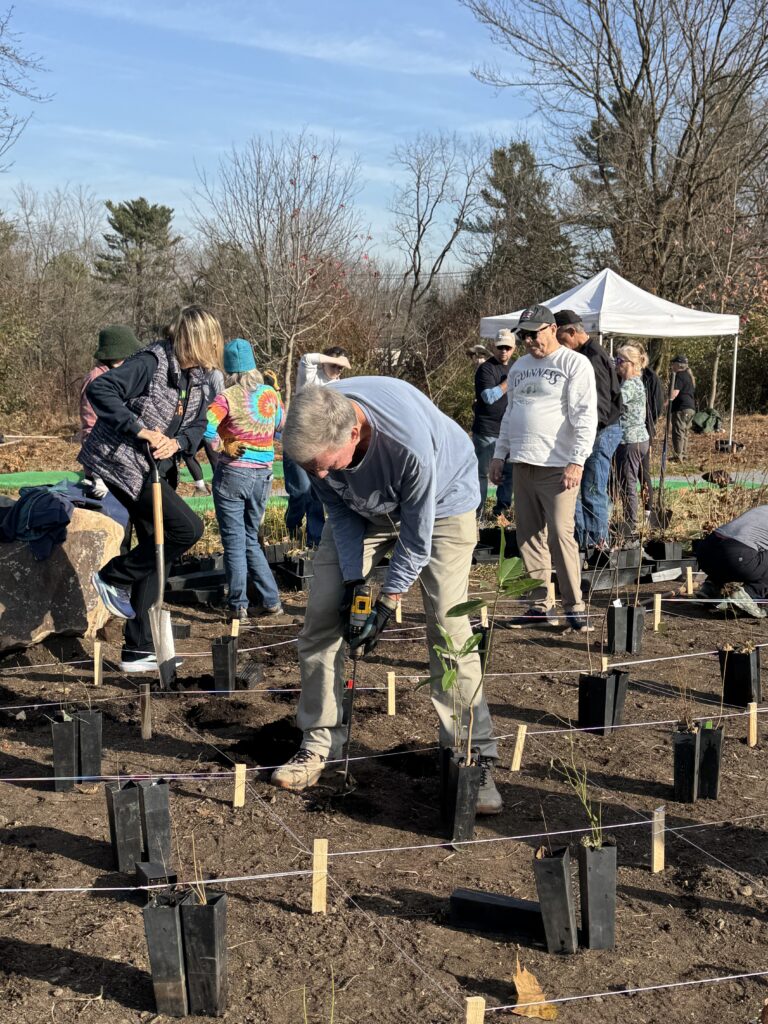
The Tiny Forest builds upon the ongoing reforestation and ecological enhancements at Noel Dorwart Park, including earlier tree plantings, native meadow development, and stormwater management improvements supported by the Alliance for the Chesapeake Bay and community partners.
Together, these efforts are helping transform Noel Dorwart Park into a destination where environmental restoration, recreation, education, and community engagement coexist.
The work does not end with planting day. As the forest becomes established, ongoing watering, weeding, monitoring, and maintenance will help ensure these young plants have the opportunity to thrive.
A Forest with a Story: Remembering Casper and Honoring Jim Warner
The Tiny Forest will be more than an environmental restoration initiative. It will also serve as a place of remembrance, reflection, and connection.
For many in the Lancaster community, Casper, the distinctive white piebald deer frequently spotted in the area, became a beloved symbol of the natural world that exists alongside our neighborhoods. Following the deer’s death in 2025, an opportunity emerged to celebrate the animal’s memory through a permanent public art installation.
The project also carries a deeply personal connection to James “Jim” D. Warner (1958–2026), a respected environmental leader who served as CEO of the Lancaster County Solid Waste Management Authority for 22 years, from 1996 to 2018. Casper held a special place in the hearts of the Warner family.
Jim’s connection to this landscape extends far beyond the white deer. Under his leadership, LCSWMA opened the Farmingdale Trail in 2009, transforming approximately 70 acres of open space into a recreational resource for the community.
His commitment to environmental stewardship, public recreation, resource recovery, and community partnerships helped lay the groundwork for the connections we continue to build today.
Through the Tiny Forest, the future sculpture, and dedicated commemorative signage, this space will celebrate Jim’s legacy while recognizing the meaningful connections that can develop between people, wildlife, and the places we call home.
It is a fitting tribute to someone who dedicated his career to protecting environmental resources and serving the Lancaster community.
Learn more about Jim Warner’s remarkable legacy of environmental leadership and community service in LCSWMA’s tribute.
From Reclaimed Materials to Meaningful Art
Nestled within the growing woodland will be a sculpture inspired by Casper.
Through the Blue Green Connector’s Art on the Trail program, artists have been invited to envision a sculpture that reflects the spirit of the white deer while complementing the surrounding natural environment.
In partnership with LCSWMA, the sculpture will incorporate reclaimed metal, which must constitute at least 50% of the finished artwork. The selected artist will have the opportunity to visit LCSWMA’s facility, explore available recovered materials, and identify components to incorporate into the sculpture.
By transforming discarded materials into a meaningful work of public art, the installation will also tell a story about resource recovery, sustainability, and renewal — themes that reflect both Jim Warner’s professional legacy and the environmental mission of the Blue Green Connector.
The relationship between the sculpture and the Tiny Forest will be particularly unique. As the trees and shrubs mature, the setting surrounding the artwork will change dramatically. What begins as a sculpture among young seedlings will eventually become an artistic encounter within an established woodland.
Each season, and each passing year, will offer visitors a different experience.
Discover more about the vision behind this installation in our earlier blog, The White Deer Returns: A New Art Installation Celebrating Wildlife, Community, and Renewal.
The project has also received local media attention, including coverage from LNP | LancasterOnline: Sculpture of Rare White Deer Killed in 2025 Coming to East Hempfield Township Trail.
Where Art, Nature, and Education Meet
The Tiny Forest and white deer sculpture are part of a larger vision for integrating public art and environmental education throughout the Blue Green Connector.
Art has the ability to invite curiosity, encourage exploration, and help people develop a deeper appreciation for the landscapes around them. When paired with environmental restoration, it can also help communicate ecological concepts and tell the stories of the people and places that shape our community.
This approach is already taking shape at Noel Dorwart Park through the Little Library initiative, which brings together student creativity, native wildlife illustrations, literacy, and outdoor learning.
The Tiny Forest and white deer sculpture will build upon these experiences, creating another opportunity for visitors to engage with nature through both scientific discovery and artistic interpretation.
Looking Ahead: Trail, Art, Education & Remembrance
The planting of the Tiny Forest represents the first chapter in the development of this special space along the Blue Green Connector.
As we look ahead to 2027 and beyond, several exciting elements will help bring the full vision to life.
An Accessible Trail
A pathway through the Tiny Forest will allow visitors to experience the evolving woodland firsthand, connecting this special destination to the larger 3.5-mile ADA accessible Blue Green Connector greenway.
The White Piebald Deer Sculpture
A permanent public artwork inspired by Casper will be created using reclaimed materials, celebrating wildlife, sustainability, community connection, and renewal.
Commemorative Signage Honoring Jim Warner
Dedicated signage will share Jim’s story, recognize his contributions to Lancaster County, and help future generations understand the significance of this living legacy.
Environmental Education
The growing forest will provide opportunities to learn about native species, biodiversity, woodland succession, wildlife habitat, and the importance of environmental stewardship. It will serve as another extension of the Blue Green Connector’s vision for a living, outdoor learning lab.
A Pennsylvania College of Art & Design Exhibition
In 2027, a forthcoming exhibition in partnership with Pennsylvania College of Art & Design (PCA&D) will provide another opportunity for the community to explore the intersection of art, nature, and environmental stewardship.
Together, these elements will create a destination that invites visitors to slow down, explore, learn, and reflect.
Growing Something That Will Outlast Us
One of the most meaningful aspects of the Tiny Forest is that its story will never truly be finished.
The volunteers who planted these seedlings helped establish something that future generations will experience in an entirely different way. With time, birds will find shelter among the branches, pollinators will visit flowering shrubs, and visitors will walk beneath a canopy that today exists only as a collection of young trees and a shared vision.
The Tiny Forest embodies the larger mission of the Blue Green Connector: restoring our natural environment while creating meaningful opportunities for people to connect with it — and with one another.
It is a reminder that environmental restoration is not only about repairing the landscapes of our past, but also about intentionally creating the landscapes we hope to leave behind.
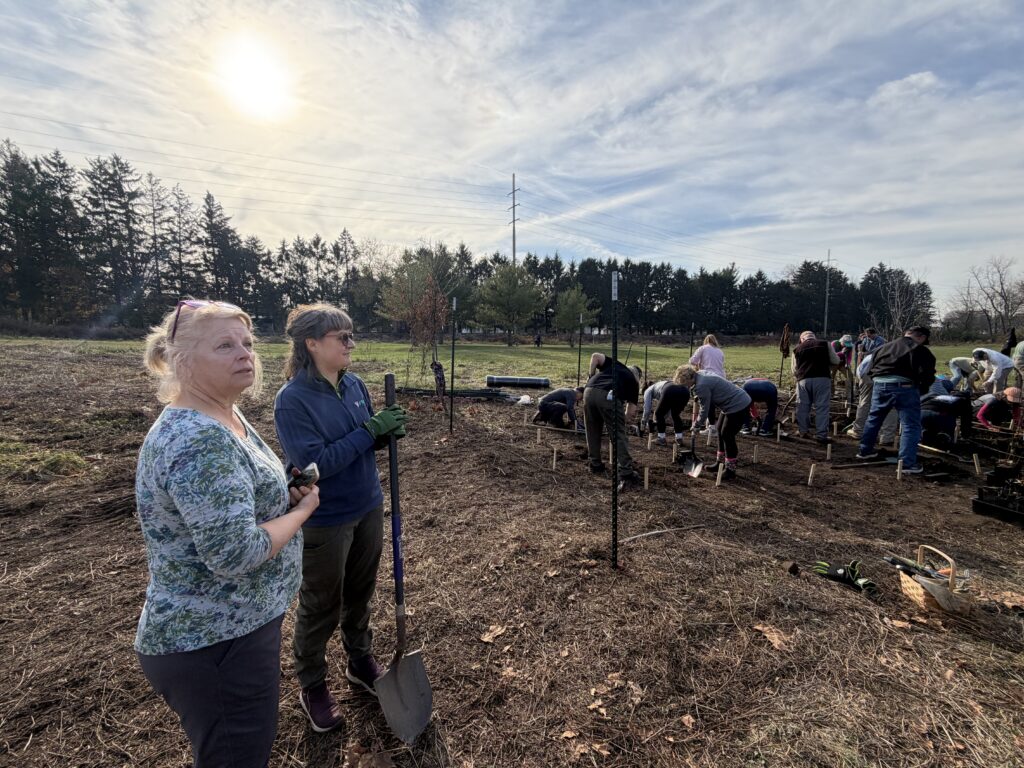
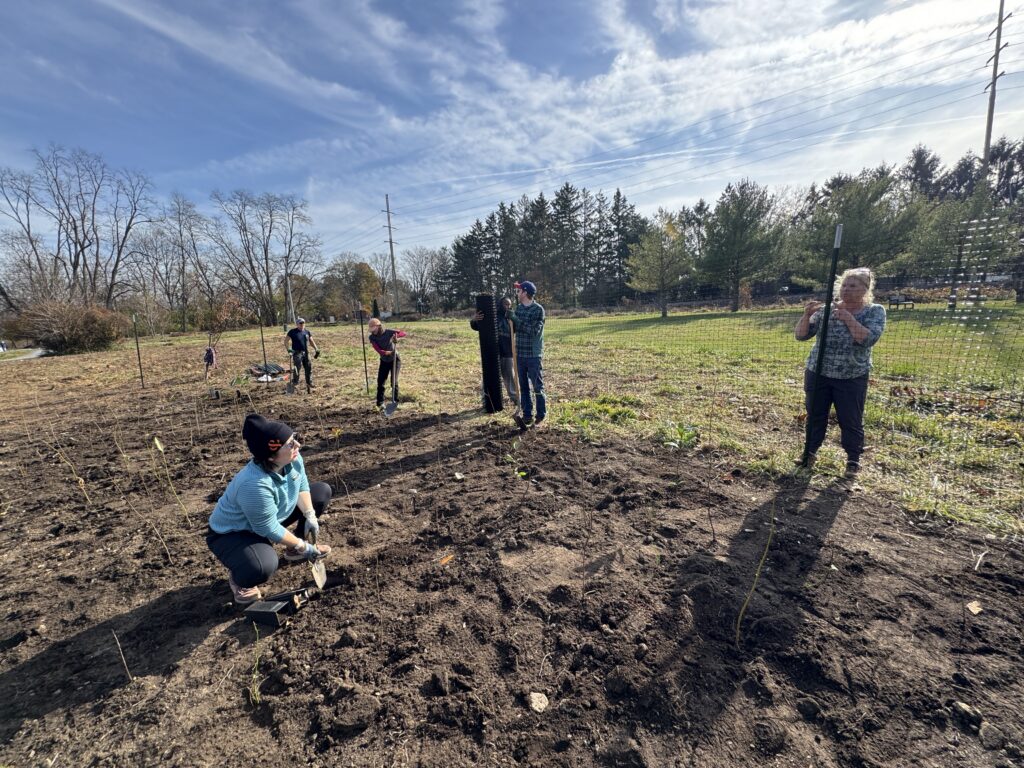
Today, we planted a forest.
In the years ahead, it will become a habitat, an outdoor classroom, a place of remembrance, and a living legacy.
And this is only the beginning.
Follow the Blue Green Connector as we share the growth of the Tiny Forest, the development of the white deer sculpture, and future opportunities to help care for this special place.
Continue Exploring: Related Stories & Resources
From the Blue Green Connector
- The White Deer Returns: A New Art Installation Celebrating Wildlife, Community, and Renewal
- Art on the Trail
- Rewilding & Ecological Restoration
- The Little Library at Noel Dorwart Park
In the News & From Our Partners
- LNP | LancasterOnline — Sculpture of Rare White Deer Killed in 2025 Coming to East Hempfield Township Trail
- LCSWMA — Remembering James D. Warner: A Transformational Leader in the Waste Industry
- Alliance for the Chesapeake Bay — Lancaster Park Receives Trees, Meadow, and More
- Pennsylvania College of Art & Design —“Birds, Books and a Hidden Mouse: Eliza Moulder’s Art Takes to the Trail”
Learn More About Tiny Forests & Biodiversity
- Penn State Extension — Laying Fast Tracks Toward Climax Forests
- Penn State Extension — Forest Biodiversity: Understanding Biological Health in Our Forests
