
An iconic visitor to the Little Conestoga Creek will inspire a life-size sculpture where art, restoration, and community memories come together.
Some wildlife encounters stay with us long after the moment has passed. For residents and visitors exploring the trails near Noel Dorwart Park, one particularly remarkable animal left a lasting impression: a rare, snow-white piebald buck who became a beloved symbol of the Little Conestoga Creek landscape.
Now, the Blue Green Connector is working to bring the spirit of this extraordinary animal back to the trail through a new public art installation that celebrates wildlife, environmental restoration, and the connections we share with nature.
A Familiar Face Along the Creek
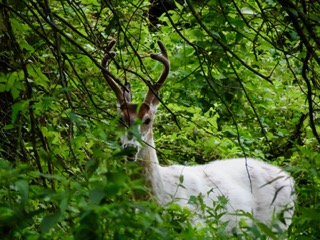

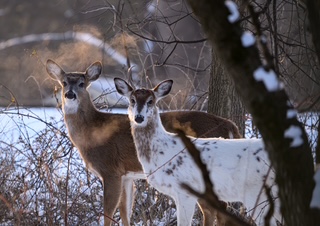
For at least four years, a rare male piebald buck with striking white coloring roamed the natural areas surrounding the Little Conestoga Creek and Farmingdale trails, and became affectionately known by some as “Casper.”
Unlike a typical white-tailed deer, his unusual coloring made him instantly recognizable. Neighbors, walkers, birders, and trail enthusiasts frequently spotted and photographed him, sharing stories of unexpected encounters along the creek.
Over time, the white deer became more than a rare sighting. He became part of the community’s shared experience of this landscape.
Following his untimely and unlawful death, community members created a temporary handmade tribute near the creek, demonstrating just how meaningful one wild animal had become to those who encountered him.
His story reminds us that connecting with nature doesn’t always require a grand adventure. Sometimes, a single unexpected encounter can inspire a lifelong appreciation for the natural world.
Bringing the White Deer Back to the Trail
To honor that connection, the Blue Green Connector is actively commissioning an approximately life-size metal sculpture of the white deer.
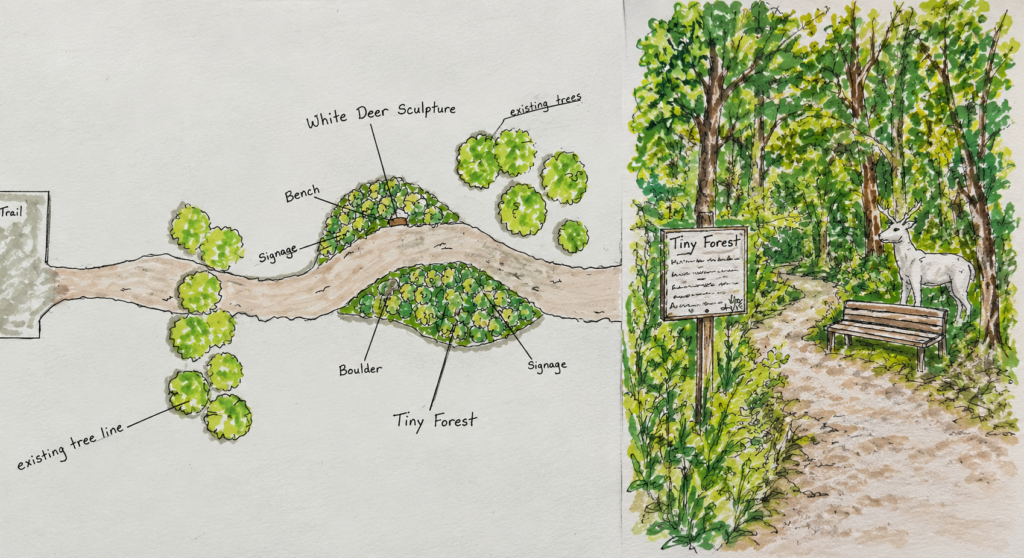
The artwork will be installed near the Noel Dorwart Park Trailhead, nestled within a new Miyawaki Tiny Forest designed by Susan Baldrige which is being established on property owned by the Lancaster County Solid Waste Management Authority (LCSWMA).
Rather than creating a traditional memorial, the vision is to celebrate the resilience of nature and the relationships that develop between people, wildlife, and place.
Imagine walking along the trail and catching a glimpse of a white deer emerging from the trees. For a moment, visitors might experience the same sense of wonder that made encounters with the living deer so memorable.
As the surrounding tiny forest grows, the sculpture will become increasingly integrated into the landscape, creating an experience that evolves with the seasons and the years.
A Tiny Forest with a Big Purpose
The sculpture will have a unique home: a Miyawaki Tiny Forest, planned for planting in fall 2026.
This restoration technique uses densely planted, diverse native trees and shrubs to encourage the development of a healthy, resilient forest ecosystem.
The forest will also tell a larger story of environmental transformation. Located on land associated with a former landfill, the site reflects how landscapes can be reimagined and restored to support both wildlife and community enjoyment.
When the sculpture is first installed, young trees will offer relatively open views of the artwork. As the forest matures, visitors will discover the deer nestled among increasingly dense vegetation, much like encountering wildlife in its natural habitat.
A nearby bench and educational signage are also envisioned, inviting visitors to pause, reflect, and learn about the importance of native forests and biodiversity.
Turning Reclaimed Metal into Meaningful Art
The sculpture’s story of renewal will extend beyond the landscape itself.
Through a partnership with LCSWMA, at least 50% of the artwork will be created using reclaimed metal recovered through the organization’s waste-to-energy process.
The selected artist will have the opportunity to transform these materials into something entirely new, giving discarded metal a second life as a lasting piece of public art.
It’s a fitting approach for a project rooted in environmental stewardship: transforming materials that might otherwise be discarded into a creative expression of the natural world.
The collaboration reflects a central idea behind the Blue Green Connector: restoration and renewal can take many forms, from restoring floodplains and planting forests to reimagining how materials can be used to create something meaningful.
More Than a Sculpture: A Moment of Discovery
Art is an important part of the Blue Green Connector’s vision to create a 3.5-mile accessible greenway that brings together recreation, environmental restoration, education, and creativity.
The White Deer sculpture will offer something special along that journey: a moment to slow down, look closer, and appreciate the wildlife and natural spaces that make Lancaster County unique.
For those who remember the white deer, the installation will offer a familiar and meaningful connection to the past. For those encountering his story for the first time, it will be an invitation to discover the beauty and biodiversity of the Little Conestoga Creek corridor.
And for future generations, it will serve as a reminder that the landscapes we protect today shape the experiences and memories of tomorrow.
A New Chapter for the White Deer
As the Blue Green Connector moves forward with the artist commissioning process and preparations for the Tiny Forest are in motion, we’re excited to see this special project take shape.
In the coming months, we’ll share updates about the selected artist, the sculpture’s design, and the transformation of reclaimed materials into a lasting community landmark.
Our beloved white deer may no longer roam the trails, but his story will continue to inspire curiosity, connection, and care for the natural world.
Because sometimes, the most meaningful connections to a place begin with a moment of wonder.
